 ช้างเผือก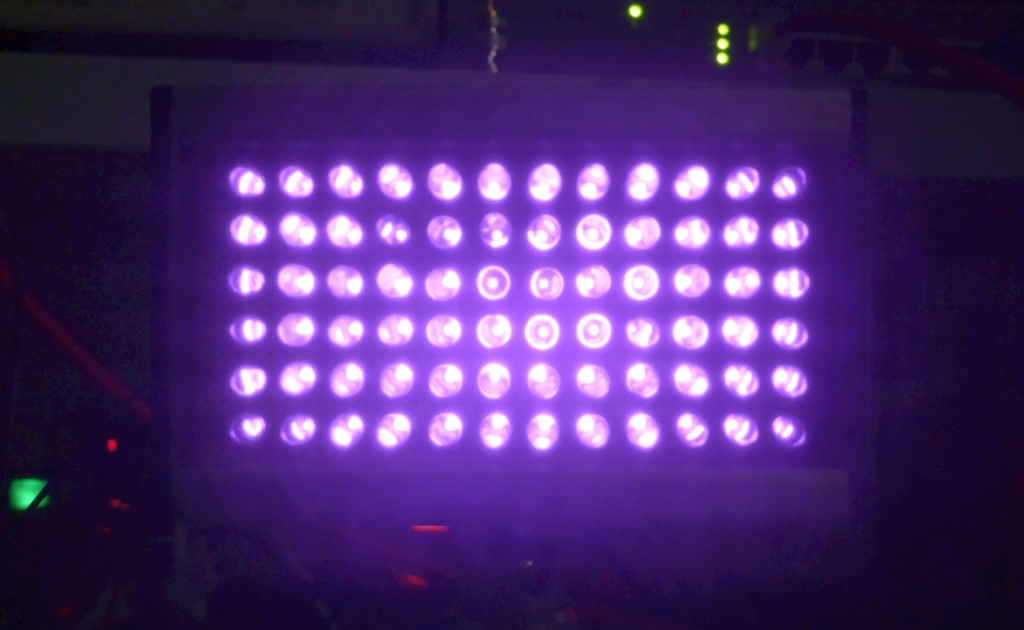
Categories
Statistics
Since 08.08.2014
Counts only, if "DNT = disabled".
216.73.217.10
216.73.217.10
Counts only, if "DNT = disabled".
216.73.217.10
216.73.217.10
Info




เราจะทำแบบวิศวกรผู้ยิ่งใหญ่
17. October 2026
YOUR OPINION •••
average: 0.001, n: 0

When using this form, your ip is stored in order to avoid multiple voting on the same website. That's it.
When using this form, your ip is stored in order to avoid multiple voting on the same website. That's it.

IR-GhettoBlaster.php 11663 Bytes 04-03-2025 19:13:15
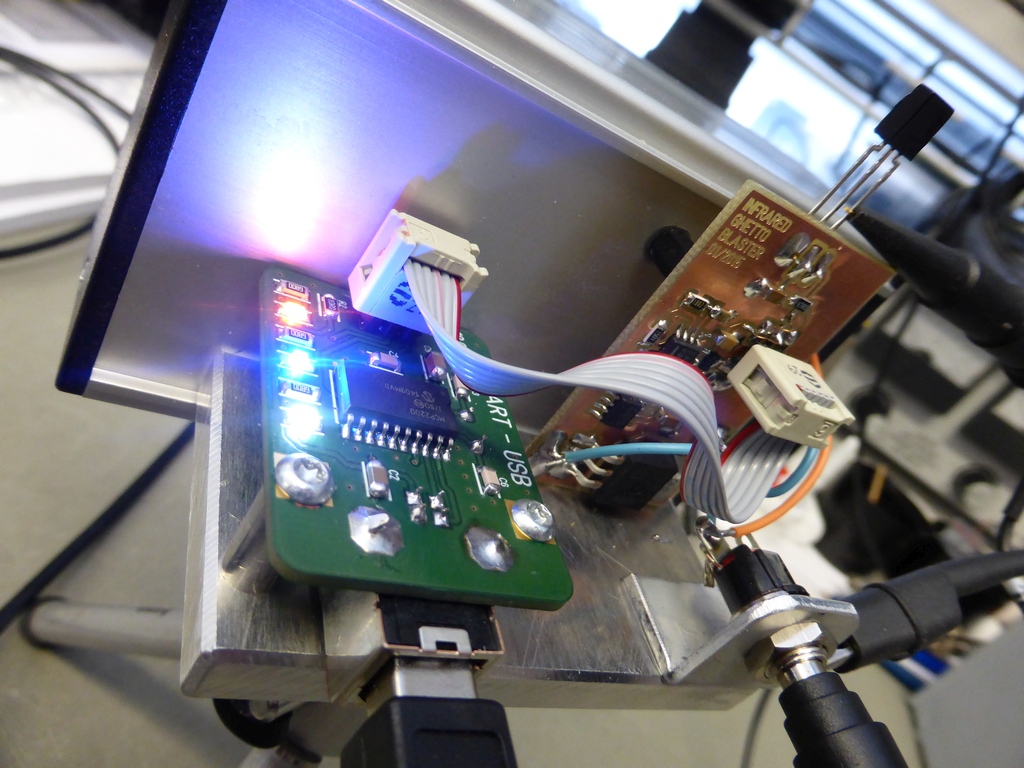
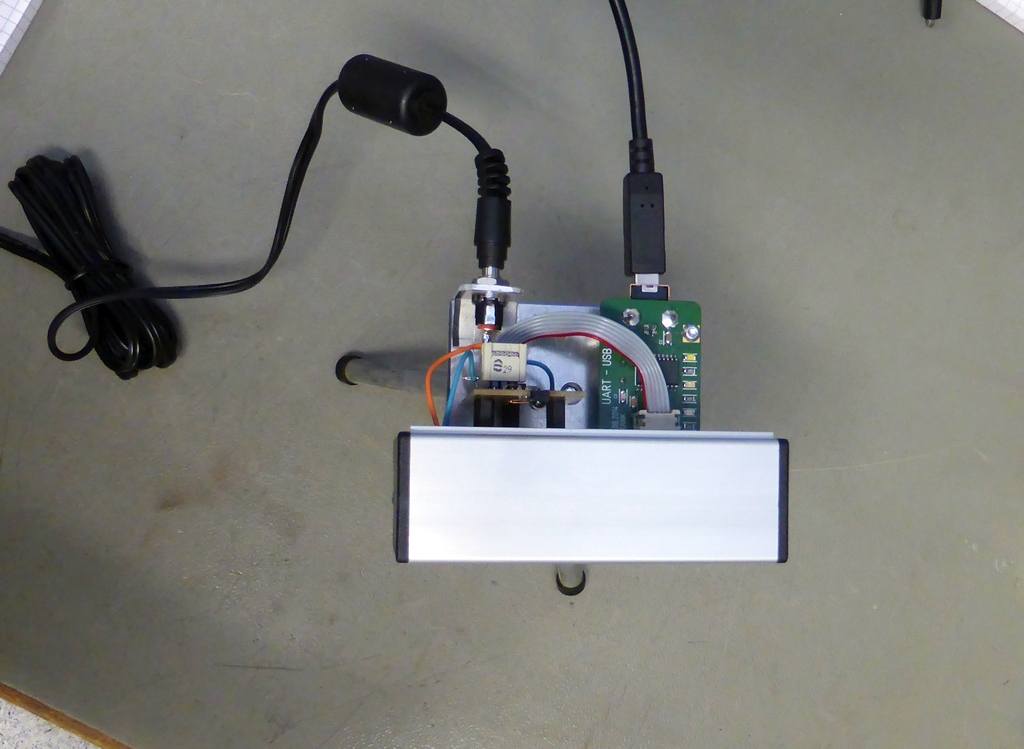
USB - IR - Transceiver (aka Ghetto Blaster)
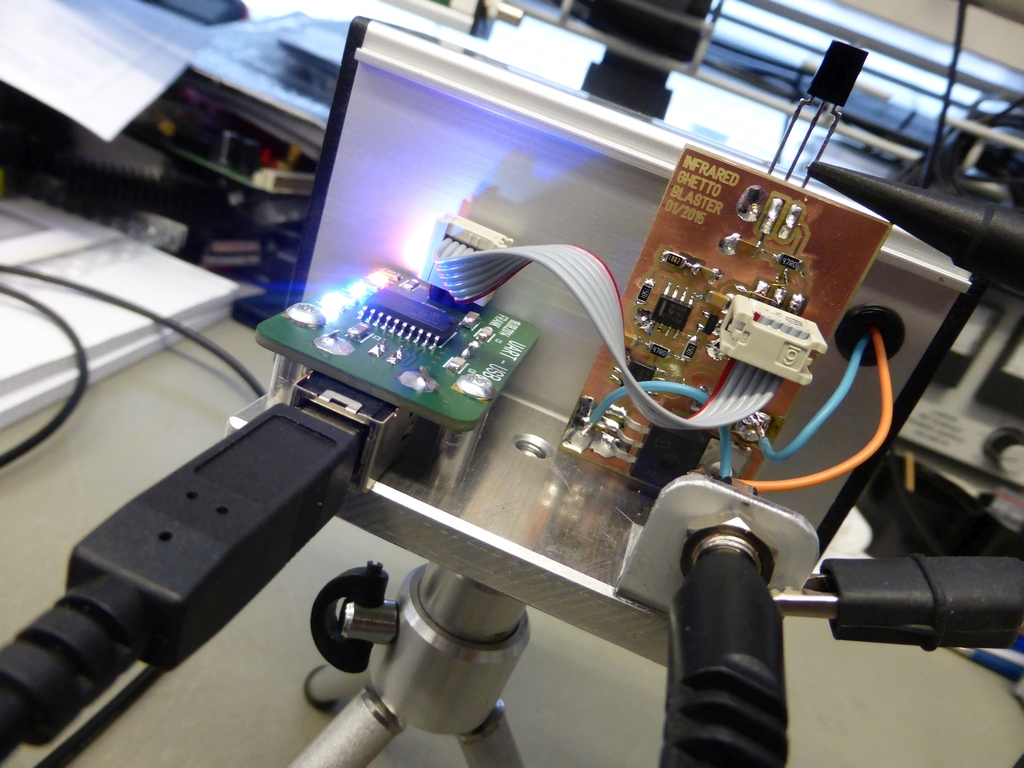
This nice gadget directly uses the bitstream coming out of the USB-UART-Adapter to
key an oscillator (on/off), build around a NE555. The carrier is approx. 38 kHz, close to those of a
Remote Control. Just louder :-) A recycled IR - Receiver provides an rx path.
Circuit Description
The circuit uses the USB-UART-Adapter as an interface to
extract the UART data. With the TX signal a NE555 is on/off keyed by means of the RESET pin. The so generated 38 kHz bursts are amplified
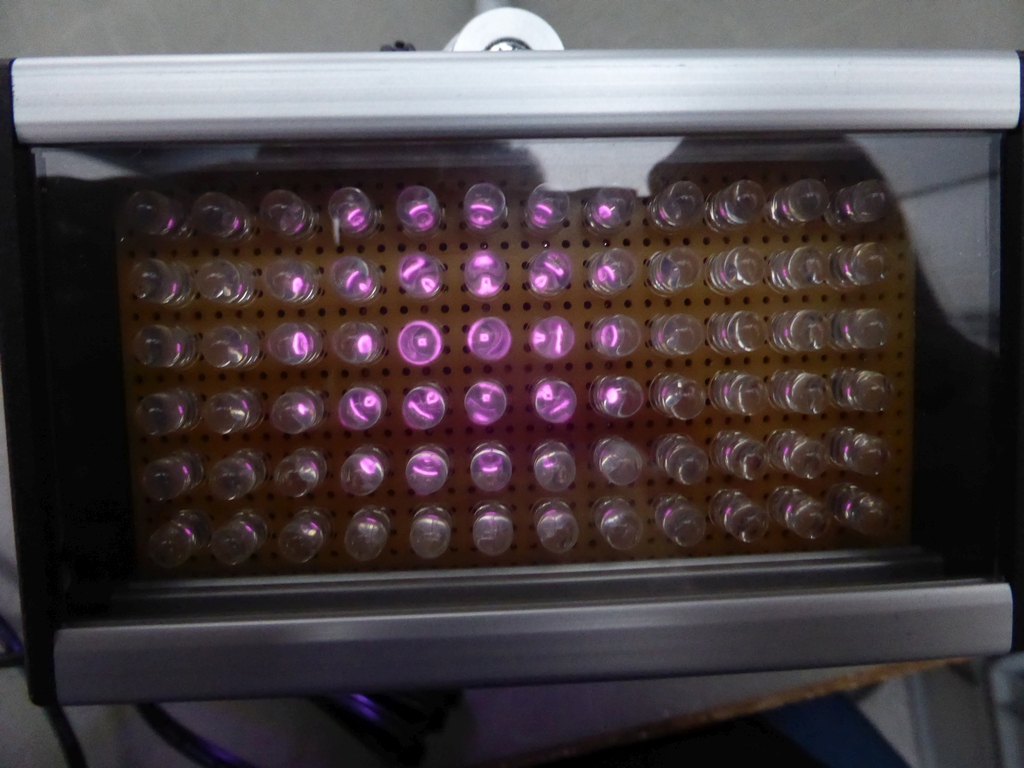
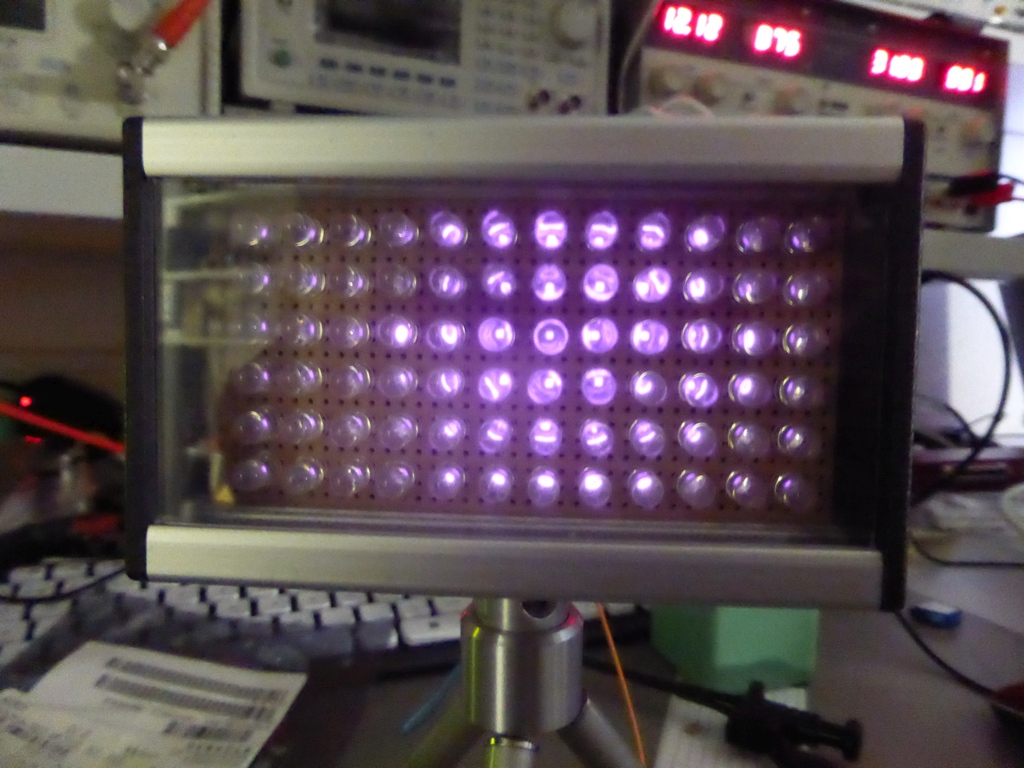
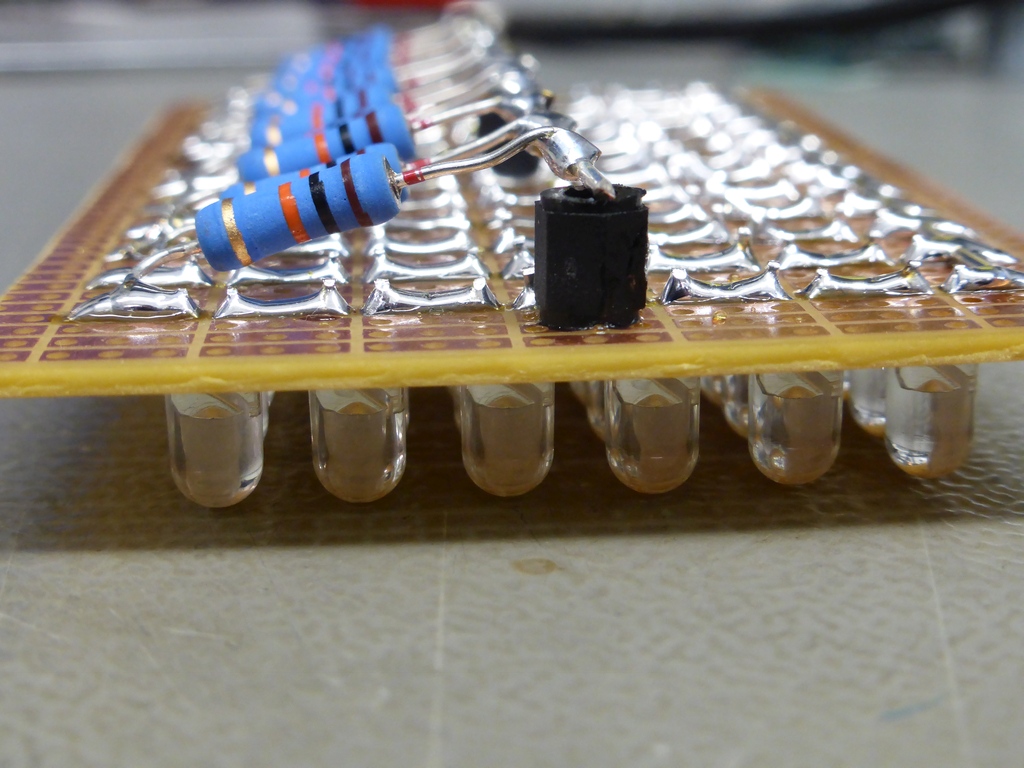
by a FAN3225 which drives the SPP80N08S2L-07 (Logic Level Power-Transistor) which switches the LED matrix. The used LED's are
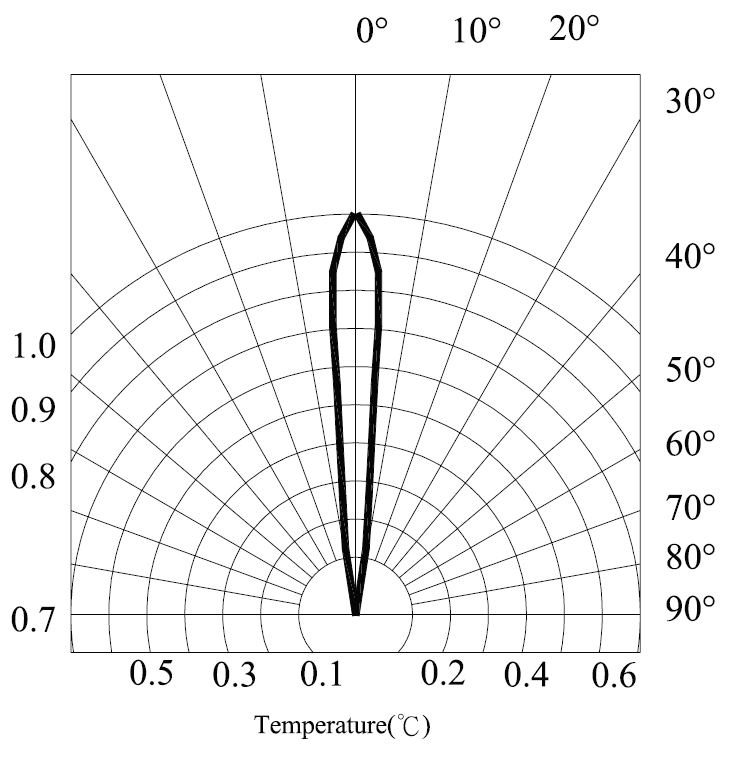
OFL-51 which operate at 940 nm and have an aperture angle of approx. 10°, as it is intended for an unvisible point to point datalink.
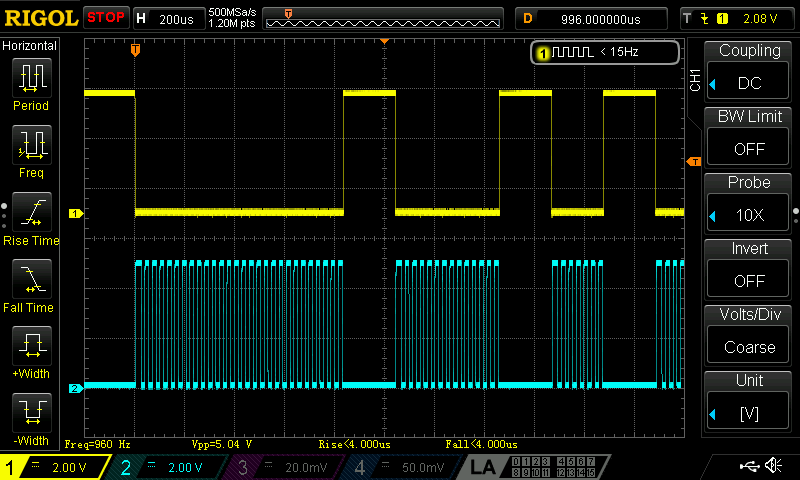
An inverter has been inserted in order not to have the IR-LEDS always on when the bus is idle. The resistor for the carrier oscillator (R2, now 16kΩ) had to be optimised empirically, as calculation yielded a frequency slightly below. For the RX path, we used a TSOP39138 (IR Receiver Modules for Remote Control Systems). It was selected to match the carrier frequency from the NE555 as well as the wavelength of the diodes. A lot of different types are available to match nasty environmental conditions.
An inverter has been inserted in order not to have the IR-LEDS always on when the bus is idle. The resistor for the carrier oscillator (R2, now 16kΩ) had to be optimised empirically, as calculation yielded a frequency slightly below. For the RX path, we used a TSOP39138 (IR Receiver Modules for Remote Control Systems). It was selected to match the carrier frequency from the NE555 as well as the wavelength of the diodes. A lot of different types are available to match nasty environmental conditions.
Configuration (USB-UART-Adapter)
The device must be configured before use. Microchip offers several tools to do so. You may freely choose a VID (vendor ID) and PID (product ID)
as long as your project will not escape your lab. (In case you leave the door open : a wrong driver may be loaded :-) So be careful !
You may lock yourself out when using a different VID (default:0x04D8)
We suggest you use the following settings : (Tools are from Microchip Website)
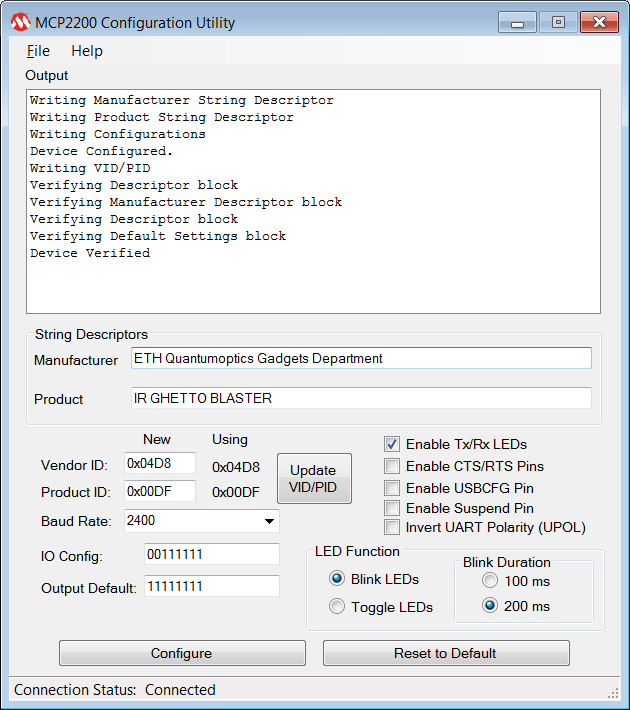
We suggest you use the following settings : (Tools are from Microchip Website)
(Self) Test
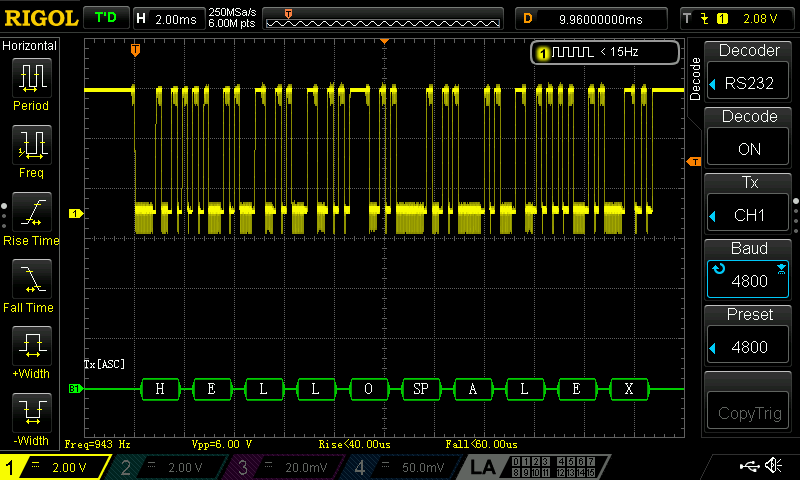
The device now sends to the (white) ceiling. We record the received (reflected) data with a terminalprogramm - and with an oscilloscope.
The picture says (not all) but a lot.
Now as we have that much (transmit) power, it may be interesting how far can we reliably transmit and receive data. To measure that, we must develop a website on BER (Bit Error Rate) first. This test will be added on a later time.
Now as we have that much (transmit) power, it may be interesting how far can we reliably transmit and receive data. To measure that, we must develop a website on BER (Bit Error Rate) first. This test will be added on a later time.
Downloads


✈ Share your thoughts
The webmaster does not read these comments regularely. Urgent questions should be send via email.
Ads or links to completely uncorrelated things will be removed.
|
t1 = 7401 d
t2 = 260 ms |
★ ★ ★ Copyright © 2006 - 2026 by changpuak.ch ★ ★ ★
|
|


