 ช้างเผือก
Categories
Statistics
Since 08.08.2014
Counts only, if "DNT = disabled".
216.73.216.203
216.73.216.203
Counts only, if "DNT = disabled".
216.73.216.203
216.73.216.203
Info




เราจะทำแบบวิศวกรผู้ยิ่งใหญ่

15. October 2026
YOUR OPINION •••
average: 0.001, n: 0

When using this form, your ip is stored in order to avoid multiple voting on the same website. That's it.
When using this form, your ip is stored in order to avoid multiple voting on the same website. That's it.
Arduino-Madimod-MPL115A2.php 8042 Bytes 29-09-2026 17:18:23
Arduino Madimod 77110 - Environmental Monitoring
This one describes the Barometric Pressure Sensor MPL115A2
✈ Isn't the Barometric Pressure at the beach constant ?
No. At sea level, the standard air pressure is 1013.2 millibar. But the barometric pressure at the beach, or
anywhere, is not always the same. It's constantly changing due to various factors, including weather patterns,
temperature, and altitude. While the average barometric pressure at sea level is around 1013.2 millibars,
it's a dynamic reading and fluctuates. Therefore operating such a sensor promises interesting insights in
weather development - and forecast.
✈ The workhorse : MPL115A2 from Freescale Semiconductor
"The MPL115A2 is an absolute pressure sensor with a digital I2C output targeting
low cost applications. [...] It employs a MEMS pressure sensor with a conditioning IC to
provide accurate pressure measurements from 50 to 115 kPa (0.5 to 1.15 Bar). An integrated
ADC converts pressure and temperature sensor readings to digitized outputs via
a I2C port. Factory calibration data is stored internally in an on-board ROM.
Utilizing the raw sensor output and calibration data, the host microcontroller
executes a compensation algorithm to render Compensated Absolute Pressure
with ±1 kPa accuracy."
Says the datasheet, courtesy of Freescale Semiconductor
Says the datasheet, courtesy of Freescale Semiconductor
✈ Barometric Pressure and that Weather Forecasting thing
A falling barometer (decreasing air pressure) generally indicates approaching bad weather, while a rising barometer
suggests improving weather or fair conditions. Rapidly falling pressure can signal a storm, and a persistent low
pressure suggests continued rain or cloudy conditions.
Falling Pressure:
A sudden drop in pressure often indicates a low-pressure system is approaching. This usually means cloudier skies, potentially rain, and possibly wind. A very rapid drop in pressure, especially below 1000 hPa, can suggest a storm is on the way.
Rising Pressure:
A rising barometer indicates a shift to higher pressure, often associated with better weather. High pressure systems are typically associated with clear skies and calm winds. A rising pressure after a period of low pressure suggests that the storm or unsettled weather is passing.
Other Factors:
The rate of pressure change is important. A gradual drop or rise is less indicative of an immediate weather change than a rapid shift. In very hot weather, a falling barometer can signal thunder, while in frosty weather it can suggest a thaw. Air pressure is also affected by altitude, with pressure generally decreasing as altitude increases. In essence, using a barometer to predict weather involves understanding the relationship between pressure changes and the potential for various weather conditions. It's a useful tool for short-term weather prediction, but should be considered alongside other weather information for a more complete picture.
Falling Pressure:
A sudden drop in pressure often indicates a low-pressure system is approaching. This usually means cloudier skies, potentially rain, and possibly wind. A very rapid drop in pressure, especially below 1000 hPa, can suggest a storm is on the way.
Rising Pressure:
A rising barometer indicates a shift to higher pressure, often associated with better weather. High pressure systems are typically associated with clear skies and calm winds. A rising pressure after a period of low pressure suggests that the storm or unsettled weather is passing.
Other Factors:
The rate of pressure change is important. A gradual drop or rise is less indicative of an immediate weather change than a rapid shift. In very hot weather, a falling barometer can signal thunder, while in frosty weather it can suggest a thaw. Air pressure is also affected by altitude, with pressure generally decreasing as altitude increases. In essence, using a barometer to predict weather involves understanding the relationship between pressure changes and the potential for various weather conditions. It's a useful tool for short-term weather prediction, but should be considered alongside other weather information for a more complete picture.
✈ Downloads

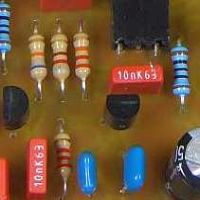
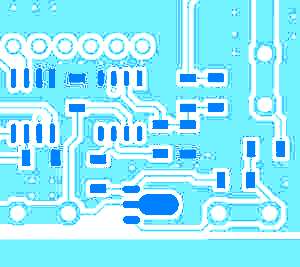

When using the Gerber Files for reproduction, please note that the pcb shall be 0.8 mm or max 1.0 mm
in thickness. This is that it can be soldered easily to th DSUB connector.

The Barometric Pressure @ Zürich, Switzerland (Home Office)
✈ Share your thoughts
The webmaster does not read these comments regularely. Urgent questions should be send via email.
Ads or links to completely uncorrelated things will be removed.
|
t1 = 7399 d
t2 = 250 ms |
★ ★ ★ Copyright © 2006 - 2026 by changpuak.ch ★ ★ ★
|
|


